
Civilian Engineer Development Program
1 opportunity
Australia
More than 10,000 employees

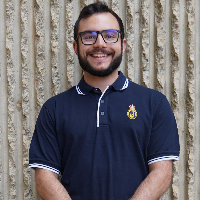
Alexander
Graduate Engineer
Bachelor of Engineering (Hons) (Mechanical and Mechatronics)
What does a typical day in your rotation look like?
Signature Analysis and Ranging Division (SARD) is an organisation which provides lethality and survivability analysis focusing on the underwater acoustic and magnetic signatures of fleet platforms. My work involves recording data from our ranges, analysing the data using various software, and producing reports for the Deputy Fleet Commander. I also get the chance to board naval warships to perform ranging tasks, understand naval platforms, and work with various systems. I have the freedom to create programs to aid in operations, data collection, and data analysis as another part of my day-to-day tasks.
My most memorable experience was on my 4th day on the job when I was boat-transferred onto HMAS ARUNTA. I was craned up on a Navy RHIB after blitzing through the Sydney harbour. We performed some system tests and went out past Sydney Heads into blue water for a trial. It was an awesome experience, being on the bridge of a warship and engaging with officers and sailors.
What is your engineering discipline?
I’m a mechanical and mechatronics engineer. Mechanical engineering involves working with machines, engines, and tools—anything that has moving parts. Mechatronics is a combination of electronics and computing, making those mechanical systems smart.
Why did you choose engineering?
From a young age I have always been fascinated with ‘anything with wheels’ as my parents would say and this progressed into a strong passion for motorcycles, cars, engines, boats, and wrenching on such, ultimately leading me down the mechanical engineering path. Later, I was convinced by university peers to enrol in a double major, adding mechatronics into the mix, and I have never looked back.
Why did you join the CEDP Graduate Program?
Ultimately, I wanted a program that offers diverse experiences. Defence is a large organisation that allows me to explore many areas, helping me uncover hidden interests. The CEDP program offers this breath of experience, and really caters to graduates. Even in my short time at MWC, I’ve worked with different existing and upcoming naval platforms, had the chance to be handson, produced reports, taken on small projects, and added value to SARD operations.
What is your Favorite Quote/Joke?
“The best time to plant a tree was 20 years ago. The second best time is now.” This quote helps me overcome procrastination and focus on the present.
Dimitri
Graduate Engineer
Bachelor of Mechanical Engineering (Honours) at RMIT
What's your job about?
As a graduate Mechanical Engineer in Directorate Navy Engineering I am given the opportunity every single day to grow and develop myself as an Engineer. Our six month rotations provide an invaluable opportunity to develop the skills required by the department to providing advice and support on the assurance of fleet platforms and matters affecting the daily lives of sailors. I conduct technical investigations, research using standards and peer reviewed papers, analysing of data sets, communicating findings and recommendations to appropriate stakeholders of both technical and non-technical background to support the certification and acquisition of the naval fleet. I have had experiences providing me exposure to life at sea and also been able to conduct testing and assurance related activities at the wharf. Back in the office I have also turned these physical experiences into meaningful outcomes to provide value to defence’s mission in the form of reports containing technical analysis.
What's the coolest thing about your job?
The coolest thing about my job is the that I am provided with never-ending opportunities to better myself as an engineer, including learning, in-person experiences, and being involved at all levels of the engineering process. I have been fortunate enough to be entrusted with tasking that allowed me to conduct a preliminary investigation into the issue, conduct a test plan to remedy the issue, work with other teams and external stakeholders to devise the optimal solution, physically install and test the solution before and after, and then report of the findings. The challenges and tasking I pushed myself to accept even outside my comfort zone led to learning something new in great depth and developing the articulation skills required to take a complex engineering problem and explain it in simple terms.
What are the limitations of your job?
The limitations of the job are mostly linked to flexibility of lifestyle. Sometimes there’s weekend work or travel to support operational requirements. Sometimes there’s early/late meetings with other nations.
The job does not incorporate design work and has a large emphasis on problem solving and assurance compared to other jobs. However, the skills obtained are incredibly valuable and develop fundamentals that every engineer requires for a successful career – regardless of where they end up. These skills may be underdeveloped in other engineering pathways.
3 pieces of advice for yourself when you were a student...
You do not have to focus on perfection and understanding every element of every course – university does not teach you to be an engineer, it teaches you how to learn rapidly and supplies some fundamental skills to do so in a work environment. No matter where you end up or what you do, a step forward is a step forward. Figure out and focus on developing engineering skills that are considered to be emerging and more valuable in the next generation of Mechanical Engineers – such as Python coding.
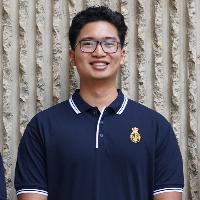
Symon
Graduate Engineer
Bachelor of Engineering (Hons) (Electrical)
What's your job about?
I am a CEDP Graduate who has just completed a rotation with our Remote and Autonomous Systems (RAS) team in the Directorate of Navy Engineering (DNE). The RAS team is responsible for providing engineering subject matter expertise, guidance and assurance on RAS systems for the Royal Australian Navy (RAN). As a graduate engineer, you get to experience a large breadth of tasks that the team works on. This is inclusive of; conducting reviews for regulatory guidelines, attending trials with the Defence Science and Technology group (DSTG), taking out our own autonomous platforms for a spin, conducting research on innovative capabilities to implement to our own platforms and reviewing systems engineering documents for external stakeholders. The RAS Cell deals with anything from unmanned aerial, surface or underwater vehicles (UxV). If there is any autonomous systems that the RAN are ever interested in, the RAS cell is likely to be there too.
What's the coolest thing about your job?
Perhaps the opportunity to immerse yourself on preparing and attending trials is the coolest thing about this job. As a graduate, you get to attend a variety of trials for the purposes of learning and expanding your knowledge. Seeing the type of work that goes into preparing these trials, furthermore actually being there to witness it is quite exciting as you get opportunities to see how these systems operate. You get to experience both the administrative and systems engineering side of a project, alongside the hands on and practical components. At least to me, it provides a holistic understanding and appreciation for the work you are doing.
What are the limitations of your job?
There will be periods where you might be travelling or busy with work depending on the deadlines your team has. This could mean that you would have to manage your time a little differently to accommodate for the new commitments work might bring.
The hands-on experience may also call for a certain level of manual handling and physical fitness. At the end of the day you still have a team to help you move the odd box or two but it definitely helps being able to provide assistance to your team wherever possible.
3 pieces of advice for yourself when you were a student...
- Talk to as many people as you can, networking opens so many doors to all sorts of things both within career/academics as well as outside of it.
- Every opportunity is a great opportunity, sometimes it may work out how you expected it to or take you by surprise, at the end of the day you’ll always learn something new.
- Don’t take everything too seriously, make sure with whatever you’re doing, you might as well have fun and enjoy it.
Samantha
Bachelor of Engineering (Mechanical) / Bachelor of Science at the Australian National University
What's your job about?
Armament Engineering Centre of Expertise in Directorate Navy Engineering is responsible for providing advice and support to the assurance of Explosive Ordnance and Weapon Systems for Navy. As Senior Weapon Systems Technical Officer, I conduct technical investigations, research using standards and peer reviewed papers, analyse data sets, preparing brief to articulate complex technical problems to decision makers and review standards to ensure suitability for certification and acquisition. This is all focused on the weapon systems including cannon systems, mounts and interfaces to combat management systems. I’ve looked issues relating to 12.7mm M2QCB machine guns through to 5 inch Naval Gun systems. It all comes back to ensuring that when an operator needs to use the weapon, they can do it safely and deliver the required effect. Most of my work is research and analysis in an office, but on occasions, I’ll make it down to a firing range or a ship to investigate an issue or oversee the conduct of a trial.
What's the coolest thing about your job?
The coolest thing about my job is the depth of the technical challenges and our approach to addressing them. It could be a collation of peer reviewed scientific papers to explain the fundamentals of ballistics, developing test plans for investigation firings or working through acquisition specifications for new equipment. Every challenge leads to learning something new in greater depth and developing the articulation skills required to take a complex engineering problem and explain it in simple terms.
What are the limitations of your job?
The limitations of the job are mostly linked to flexibility of lifestyle. Sometimes there’s weekend work or travel to support operational requirements. Sometimes there’s early/late meetings with other nations.
Additionally, sometimes physical fitness plays in to getting the hands on experience. Its not strictly necessary but it is helpful. This means getting around ships and engaging in live fire exercises.
For someone with a medical condition, there are a few extra administrative hoops to jump through even with reasonable fitness.
3 pieces of advice for yourself when you were a student...
You don’t need to have a clear idea of where you want to go in life. Take any opportunity that comes and work out what you want to do or don’t want to do as the case may be. Sometimes the journey is more important than the destination.

Steven
Bachelor of Engineering (Mechanical) at the University of the Sunshine Coast (USC)
What's your job about?
The Directorate Navy Engineering (DNE) is responsible for providing specialist technical advice, products and services for the Royal Australian Navy.
Within DNE, I work for the Recoverability and Survival Systems (RSS) cell. This area of work is concerned with the equipment used by the Navy to allow a vessel to continue operating after receiving damage and, if the damage is bad enough, the equipment the crew will use to evacuate and survive after abandoning the ship.
My work involves confirming that equipment that is either to be procured or already in-service meets and maintains its performance, which is determined by specified standards. Put simply, I either review tests which have been conducted on equipment, or develop and perform my own testing procedure and then compare it with expected outcomes. The equipment I work on includes; life rafts, life jackets, survival suits, lifting equipment, fire suppression systems, water pumps and leak repair tools.
What's the coolest thing about your job?
Easily the coolest thing about my job is being involved with physical testing on Navy ships or equipment. Ships are basically floating buildings, which, for a mechanical engineer make them fascinating as they have everything from diesel engines to HVAC systems, so being able to work on one is an amazing opportunity. A lot of engineering work is completed behind a desk on a computer and only some jobs give you the chance to go and see the work you have completed in person, so I definitely feel privileged being able to get hands on work.
What are the limitations of your job?
Working with international companies, my work occasionally has meetings which occur at irregular times (e.g. 1am-5am). We always get equal time off work during normal hours, so for people who like to stay up late and sleep in, this could be considered an advantage.
Another limitation of my job is that you are occasionally required to travel interstate, sometimes work weekends, and whilst away, work long hours.
3 pieces of advice for yourself when you were a student...
Try to get broad range of work experience, it will assist in selecting which field you eventually want to work in, or don’t want work in. This will also assist in gaining work once you have completed your degree.
Talk to students, lecturers and any people in your field about their experiences in the workforce. This is a good way of understanding what different sub-areas within your chosen field exist and the work they involve.
Put the effort in and you will see positive results. This applies for university grades, job applications and even just general everyday life.

Daniel
Bachelor of Engineering (Electrical and Electronic) and Bachelor of Mathematical and Computer Science (Computer Science) at the University of Adelaide
What's your job about?
I work in Weapons System Performance for the Maritime Warfare Centre (MWC) as a Software Engineer in the Department of Defence. Our group’s role is to ‘provide independent performance assessment of maritime weapon systems’. Within MWC, I am a member of the Underwater Weapons Team which is responsible for analysing all torpedo exercise firings from Submarines, Surface Ships and aircraft for the Royal Australian Navy. Basically, if a torpedo was fired during an exercise we determine what happened, when and why.
To perform our analysis across a wide range of weapons and platforms developed by different nations and companies we design our own analysis software in-house. My day-to-day role in the team involves large amounts of software development, continually updating our tools with new features or to support new types of data. This is all in support of weapons firings and major exercises, where upon completion of the exercise we acquire all the data from the various platforms involved, process it, and build a reconstruction of the events using our internal tools. We then analyse the events the exercise using this data to build a picture of what happened and investigate anything unexpected. Finally, we create both videos and reports for the crews involved to understand their performance as well as providing data for our Navy co-workers to use in developing future Navy tactics.
What's the coolest thing about your job?
Working at Garden Island means that we have half the fleet docked outside our window every day. Being so close to the waterfront allows you to get up close and personal with Navy ships and see the systems you analyse. Also by working within Fleet Command, we are heavily focussed on the current fleet rather than future projects. This means you can see the impact of the work you do rather than working on project where your decisions take years to have an effect.
What are the limitations of your job?
The biggest limitation to my job is scheduling. As weapons firing often require multiple vessels to be in the same place at the same time and operational requirements come first, plans can often change at short notice. This could mean a firing could be delayed at the last minute which can be frustrating, or it could mean dropping everything because one is now taking place on the weekend. Once the firing is done, this means again dropping all other tasks and making sure the analysis and reports are done on time to ensure the results are meaningful to those involved.
3 pieces of advice for yourself when you were a student...
Try different things. Engineering is such a large field and there are many opportunities that you don’t even know exist at University. The more you try, the better idea you have of what type of engineer you want to be.
Challenge yourself. Once you enter the workforce it’s easy to become comfortable. University is the best time to challenge yourself by applying for internships in different cities or countries. It will only be a few months and can lead to new opportunities to help set up your career.
Make the most of your free time. You won’t get anywhere as much time off once you start work, so find time for that big trip before graduating.

Lachlan
Bachelor of Engineering (Mechatronics) at the University of Wollongong
What's your job about?
I work with the Directorate of Navy Engineering, in the Vulnerability and Signature Management area. We are responsible for ensuring that Royal Australian Navy (RAN) equipment and platforms are adequately designed to reduce overall susceptibility (can we be detected by adversaries?) and vulnerability (can we withstand combat damage?).
My work is primarily concerned with the Vulnerability aspects of the above, which covers a wide range of topics and tasks. Day to day work generally includes documentation review/feedback, analysis of results from mechanical shock testing, and providing specialised advice to Defence projects or contractors. A large part of my role at the moment is reviewing technical shock qualification evidence to assess whether Navy’s requirements have been achieved. Sometimes we’re lucky enough to witness shock testing as it’s conducted, which may involve dropping equipment from a height (in a controlled environment!) and then performing functional checks to make sure everything still works.
I’ve also recently been involved in remotely planning and coordinating ballistic testing of materials at Defence facilities. Performing ballistic testing on materials in-use by the RAN ensures that we can be certain of a level of protective performance. Usually we attend these in person, however COVID-19 meant that this time it was not possible.
These are just a couple examples of tasks that the Vulnerability and Signature Management area are heavily involved in.
What's the coolest thing about your job?
My job requires me to be actively involved in discussions and decisions which have a tangible impact on future and current Defence capabilities. Being able to positively contribute to these in a way which is valued and sought-after gives me a sense of purpose in my role. On occasion, I also get to witness physical shock/ballistic testing, which is pretty cool too!
What are the limitations of your job?
Vulnerability and Signature Management advises on a subset of platform survivability topics, with the aim to minimise RAN platform’s susceptibility and vulnerability to threats. These are inherently safety-critical functions, and there is a very high associated level of responsibility which comes with working in the area. It is crucial to not only articulate our requirements, but also provide the technical justification behind them. Doing this can be quite mentally demanding, and occasionally requires me to take questions “on notice” to ensure I am providing clear and accurate guidance.
3 pieces of advice for yourself when you were a student...
Start doing Parkrun (Saturday morning 5k run) – great way to start the weekend.
Find a hobby that aligns with your degree – or change your degree to better suit your interests/hobbies! Doesn’t apply universally, but I enjoyed robotics and electronics as a hobby, and took too long to swap over to Mechatronics as an Engineering major.
Don’t stress about the things you can’t change. Learn to meditate instead.

Patrick
Bachelor of Engineering (Mechanical) at the Australian National University
What's your job about?
Navy Engineering is part of the Department of Defence and my role focusses on major systems (think – what makes a warship a warship) for new acquisitions.
My main responsibilities as a liaison officer is to assure and support engineering aspects of various projects including the Hunter Class Frigate in the acquisition phase of the capability life cycle. This role is a systems engineering role and is cross-domain covering all technology areas. My position involves significant stakeholder engagement both internally and externally to my area, and the internal coordination of technical reviews.
A typical day may include responding to emails, coordinating technical documentation reviews, representing navy engineering in a workshop or presentation, and contributing to the development of assurance documentation for Navy.
What's the coolest thing about your job?
The coolest thing about this role is the unique workplace that consists of ADF, APS and Industry and the opportunities that present themselves as a program under Navy. For example, I participated in an introductory course designed to familiarise engineers to the maritime environment for survival at sea. This saw our cohort jumping off platforms into the ocean, inflating survival rafts, trying on gas masks and more!
What are the limitations of your job?
When first starting at Defence it can feel like a never-ending task learning the processes and procedures of the department. You will usually end up with questions like “Who do I ask?”, “How do I go about this?”, and “Is it always like this?” Like with most learning curves, be patient, ask many questions and persevere. Defence is big. It does take a while to feel comfortable and after two years, I still find myself learning new things every day.
3 pieces of advice for yourself when you were a student...
Network as much as you can and actively pursue opportunities that involves employers. This could be going to conferences, completing external training, and just applying for jobs.
Have time for you and make yourself a well-rounded person. Life is not just about work. Spend time relaxing and doing the things you enjoy.
Don’t let anyone tell you that Ms Ba Cô has fantastic Banh Mi, it’s average at best.