
Standards Australia
2 opportunities
Australia
101-1,000 employees

Tomas Zrnic
Growth and Development Graduate – Commercial
Bachelor of Commerce – Management
What's your job about?
Standards Australia brings together industry, government and the wider community to develop standards that make products, services and systems safer, more efficient and more reliable in Australia and around the world.
As a Commercial Graduate, I work on a wide variety of projects that help the organisation operate more effectively and make informed business decisions. In my first rotation, I have helped improve internal processes and data reporting, supported relationships with distributors, reviewed investment frameworks and contributed to business quality assessments for the organisation’s future fund. The variety of work has given me the opportunity to learn quickly, collaborate with different stakeholders and see how commercial decisions support Standards Australia’s broader purpose.
Currently I am in my second Rotation with the Strategic Initiatives & International Team, within this I have been assisting on several projects such as workshops being held internationally, for example, I assisted with an AANZFTA (ASEAN-Australia-New Zealand Free Trade Area) Harmonisation in Renewable Green and Clean Energy workshop in Singapore. I have also been assisting international projects by writing several newsletters that are published internationally, namely a quarterly newsletter for the Pacific Quality Infrastructure Initiative and a bimonthly newsletter highlighting key standardisation milestones in Tonga for the Tonga Standards Conformance Committee.
Could someone with a different background do your job?
Definitely. My previous business experience was helpful, but I’ve learned that having the right attitude matters just as much as having a perfectly matched degree or corporate background.
You need to be curious, open to feedback and willing to learn as you go. The work often involves unfamiliar challenges, so being adaptable and thinking creatively is important. You do not need to know everything from day one. Being hardworking, asking questions and bringing your own perspective can add real value. In fact, having a different background can help you bring fresh ideas to the team and is actively encouraged, this is why being a grad is so valuable. Being able to question and change the status quo is wanted.
What's the coolest thing about your job?
The moments that make me really appreciate the work I do is when I hear that standards have helped someone or a new standard has been published that will actively help people either by improving safety or allowing communities easier paths to trade through standardisation. Even down to smallest things, once I started working at Standards Australia, I started noticing AS standards printed everywhere. Doors on trains, electrical covers in the footpath, even board games!
What are the limitations of your job?
One thing to be aware of is that some projects can take several months to progress, so you may not always see the results of your work straight away. There can also be a lot of reading and research involved before a project moves forward, especially when the topic is technical or unfamiliar. While the role offers plenty of variety, not every task moves quickly. You need to be patient, comfortable working through detailed information and able to stay focused on projects where the impact may only become clear over time.
3 pieces of advice for yourself when you were a student...
Three pieces of advice I would give my student self are:
- Keep an open mind. Every experience, including jobs that may not seem directly relevant, can help you build valuable and transferable skills.
- Reflect regularly. Think about what went well, what you could improve and what you have learned. Writing it down can help you recognise patterns over time.
- Break big goals into smaller steps. Weekly or monthly goals make long-term ambitions feel more achievable, help you track progress and make it easier to stay consistent.
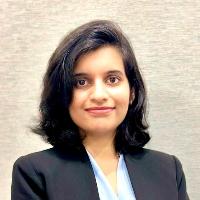
Ena Debnath
Graduate – Group Project Management Office (with rotations across Finance, Research and Analytics, IT and Legal)
Bachelor of Information Technology, double-majoring in Cybersecurity and Networking, and Enterprise Software Development
What's your job about?
Standards Australia works with industry, government and the community to develop standards that help make products, services and systems safer, more consistent and easier to use. As a graduate, I rotate through different teams and support projects that translate business needs into practical tools, processes and insights.
My work often starts with understanding a problem: speaking with the people who use a process, asking questions, reviewing existing information and identifying where things could be clearer or more efficient. From there, I help shape a solution, which might involve building a report, documenting a process, testing a new system or coordinating feedback between teams.
During my rotations, I have helped develop a benefits realisation framework for project teams, built a Power BI report that gives Finance greater visibility over purchase requisitions, purchase orders and invoices, and supported the design and testing of request forms for a Finance Service Desk. I also prepare user acceptance testing scenarios, run walkthroughs with stakeholders and refine work based on their feedback.
In simple terms, I help take an idea or business problem and make it easier for people to understand, test and act on. I enjoy that the work combines analytical thinking, communication and technology, while giving me the opportunity to understand how different parts of an organisation fit together.
What's your background?
I was born in India and spent my childhood between India and Australia, while also travelling with my family across Australia, New Zealand, the Pacific and Southeast Asia. Experiencing different places and cultures from a young age made adapting to unfamiliar environments feel natural and encouraged my curiosity about people and the wider world.
Growing up, I had varied interests. I trained in Odissi, a traditional Indian dance form, enjoyed sketching, participated in academic Olympiads and performed at school. After settling in Sydney, I became a school captain and represented my school at events including visits to NSW Parliament.
My path into technology developed gradually. In Legal Studies, I was particularly interested in metadata and the challenge of regulating digital spaces that evolve quickly, which drew me towards cybersecurity. In Year 11, I also developed a game using Microsoft MakeCode Arcade, which showed me how creative and customisable technology could be.
At university, I studied a Bachelor of Information Technology at the University of Technology Sydney, majoring in Cybersecurity and Networking. A programming subject involving data structures and algorithms later led me to add Enterprise Software Development as a second major. I also completed a project management subject, which introduced me to another area I found unexpectedly engaging.
Alongside my studies, I volunteered through UTS programs and at Vinnies, and worked in technology retail at JB Hi-Fi. These experiences helped me build confidence working with different people, explaining information clearly and adapting to different needs.
Seeing an opportunity in Standards Australia’s Group Project Management Office felt like a natural fit. I joined the Graduate Program after completing my degree in 2025 and have since worked across project management, reporting, process improvement, stakeholder engagement and system testing.
Could someone with a different background do your job?
Yes. My IT degree has helped me understand systems and data, but this work could suit people from many different backgrounds. A lot of the role involves learning quickly, asking good questions and translating between people with different priorities. Someone from business, finance, engineering, communications or another field could do well if they are curious, organised and comfortable working through ambiguity. The most important qualities are clear communication, analytical thinking, attention to detail, initiative and a willingness to listen before jumping to a solution.
What's the coolest thing about your job?
The coolest thing about my job is seeing a vague problem become something people can actually use. One highlight was building a Power BI report for Finance that brought purchase requisition, purchase order and invoice information into one place. After developing it, I walked the team through the report and could see them identifying how it could support their work. That moment, when something moves from an idea to a useful tool, is the part I find most rewarding.
What are the limitations of your job?
One aspect of the role is that you often need to work through ambiguity. In project and business improvement work, the answer is not always obvious at the start, and different stakeholders may have different priorities or ways of describing the same problem. This can be challenging, but it also makes the work interesting. You need to be comfortable asking questions, clarifying details and sometimes revisiting your assumptions. For someone who prefers very fixed instructions or immediate answers, this type of role may take some adjustment.
3 pieces of advice for yourself when you were a student...
- Don’t wait until you feel completely ready before contributing. You can still add value while you are learning, particularly by asking thoughtful questions and explaining your thinking.
- Explore more than one path. Different experiences often build on each other in unexpected ways, and you may discover strengths or interests you had not initially planned for.
- Build genuine relationships, not just technical skills. People are often happy to explain their work, and those conversations can teach you as much as formal study.
I would also remind myself that being careful is valuable, but perfection is not the goal. Clarity, curiosity and follow-through matter more.